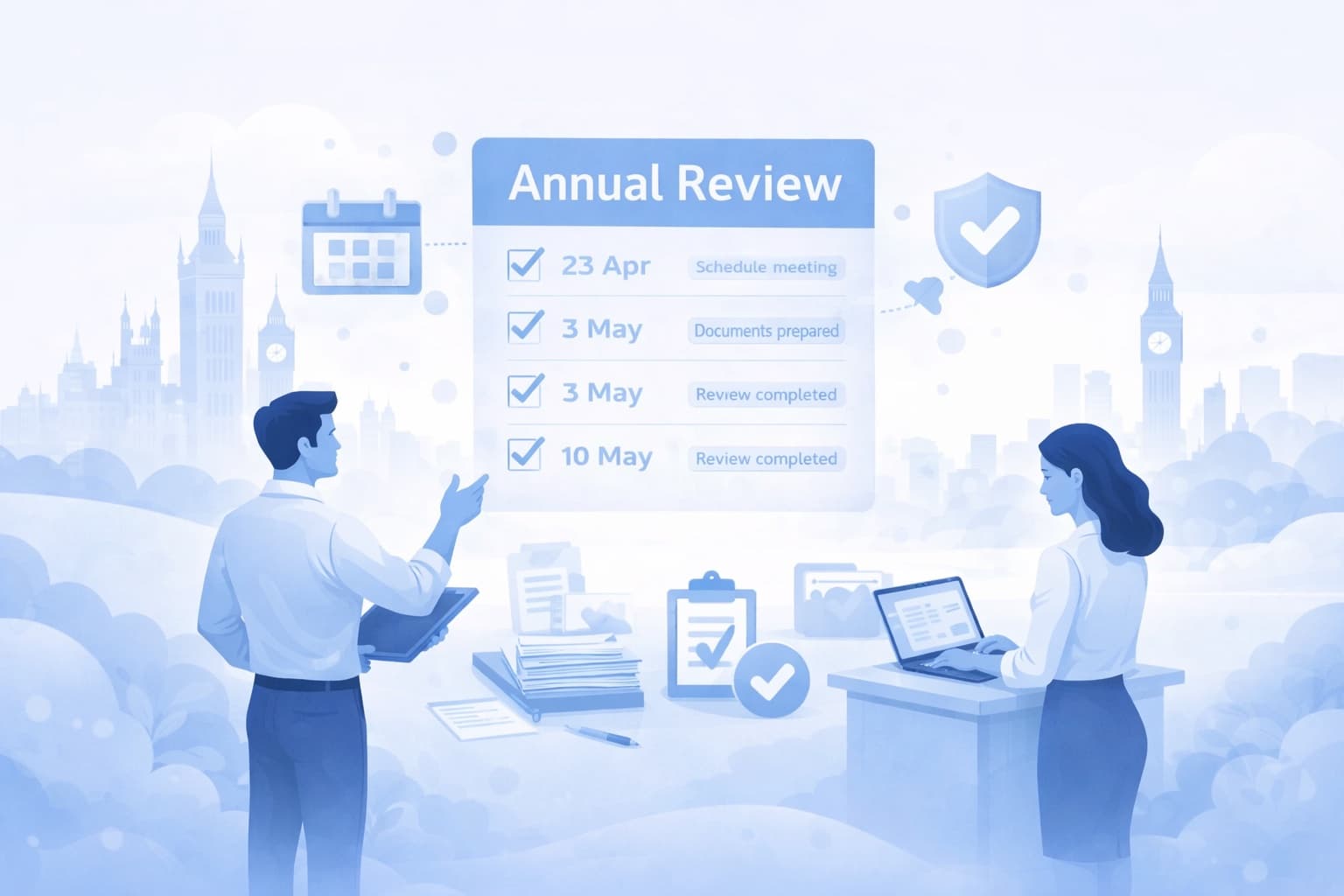
Annual client reviews are a core part of ongoing advice. They're how you demonstrate that recommendations remain suitable, respond to changes in a client's circumstances, and maintain the relationship that underpins your firm's recurring revenue.
But for many firms, reviews are also a source of operational headaches. Scheduling gets chaotic, preparation is inconsistent, and follow-up actions slip through the gaps.
This guide covers practical ways to bring structure and consistency to your review process.
Want to see how Glimzer handles annual reviews? Book a demo to see the Advice module in action.
The problem with ad hoc reviews
When reviews are managed informally, common problems emerge:
- Reviews are booked late or missed entirely because nobody tracked when they were due
- Preparation varies between advisers, leading to inconsistent client experiences
- Follow-up actions aren't recorded or are lost in email threads
- There's no firm-wide view of which reviews are complete and which are outstanding
These aren't just operational issues. Inconsistent review practices create compliance risk. If a regulator asks how you service ongoing clients, you need to show a systematic approach.
Build a review calendar
The foundation of a streamlined review process is knowing when every client review is due. This sounds obvious, but many firms don't have a single, reliable view of their review schedule.
Your review calendar should:
- Show all upcoming reviews across the firm, not just per adviser
- Flag overdue reviews so they can be prioritised
- Allow filtering by adviser, client segment, or date range
- Update automatically when a review is completed and the next one is scheduled
Glimzer's Advice module provides this through built-in review tracking with automated scheduling and reminders.
Standardise your preparation
Every client review should follow a consistent preparation process, regardless of which adviser is conducting it. This improves the client experience and makes it easier to demonstrate good practice.
A standard preparation checklist might include:
- Review the client's current portfolio and any changes since the last review
- Check for changes in circumstances (employment, health, family, goals)
- Assess whether existing recommendations remain suitable
- Prepare an agenda for the review meeting
- Gather any documents the client needs to sign or review
When this checklist lives inside your CRM and is linked to each client record, preparation becomes part of the workflow rather than something that depends on individual memory.
Automate reminders
Manual diary management is unreliable. The most effective firms automate their review reminders:
- Send the adviser a reminder when a review is approaching (e.g. 30 days before)
- Escalate overdue reviews to a manager or compliance lead
- Notify support staff to begin preparation at the right time
This removes the cognitive load of tracking review dates and frees advisers to focus on the review itself.
Record outcomes consistently
After every review, the outcome should be recorded in a structured format:
- Summary of discussion — what was covered, what the client's current position is
- Actions agreed — any changes to recommendations, new instructions, documents to provide
- Next review date — when the cycle starts again
This record serves multiple purposes: it's the basis for any follow-up work, it provides the audit trail for compliance, and it gives the next reviewer full context if the client is reassigned.
Maintaining these records in a system with built-in audit trails means every entry is time-stamped and attributed to a user, supporting your record-keeping obligations without additional effort.
Get a firm-wide view
Individual advisers managing their own review schedules doesn't scale. Firm principals and compliance leads need oversight:
- How many reviews are due this month?
- How many are overdue?
- Which advisers have the heaviest upcoming workload?
- Are review outcomes being recorded consistently?
This visibility helps you allocate resources, identify bottlenecks, and demonstrate to the regulator that your firm has a systematic approach to ongoing servicing.
A CRM designed for UK financial advisers should provide this oversight out of the box, not as a custom report you need to build and maintain.
Streamlining annual reviews isn't about doing less. It's about removing the friction that makes reviews harder than they need to be. A consistent process, supported by the right tools, means better client outcomes, cleaner records, and less stress for your team.
Ready to bring consistency to your review process? Book a demo and we'll show you how Glimzer supports ongoing client servicing for UK advice firms.