Regulation
Pensions and inheritance tax: what changes in April 2027, and where firms can start
By Tom Matthieson · 22 July 2026 · Updated 17 September 2026
For years, the pension was the asset a client spent last. Unused funds usually passed to beneficiaries free of inheritance tax, so the planning logic wrote itself: draw on everything else first and leave the pension alone.
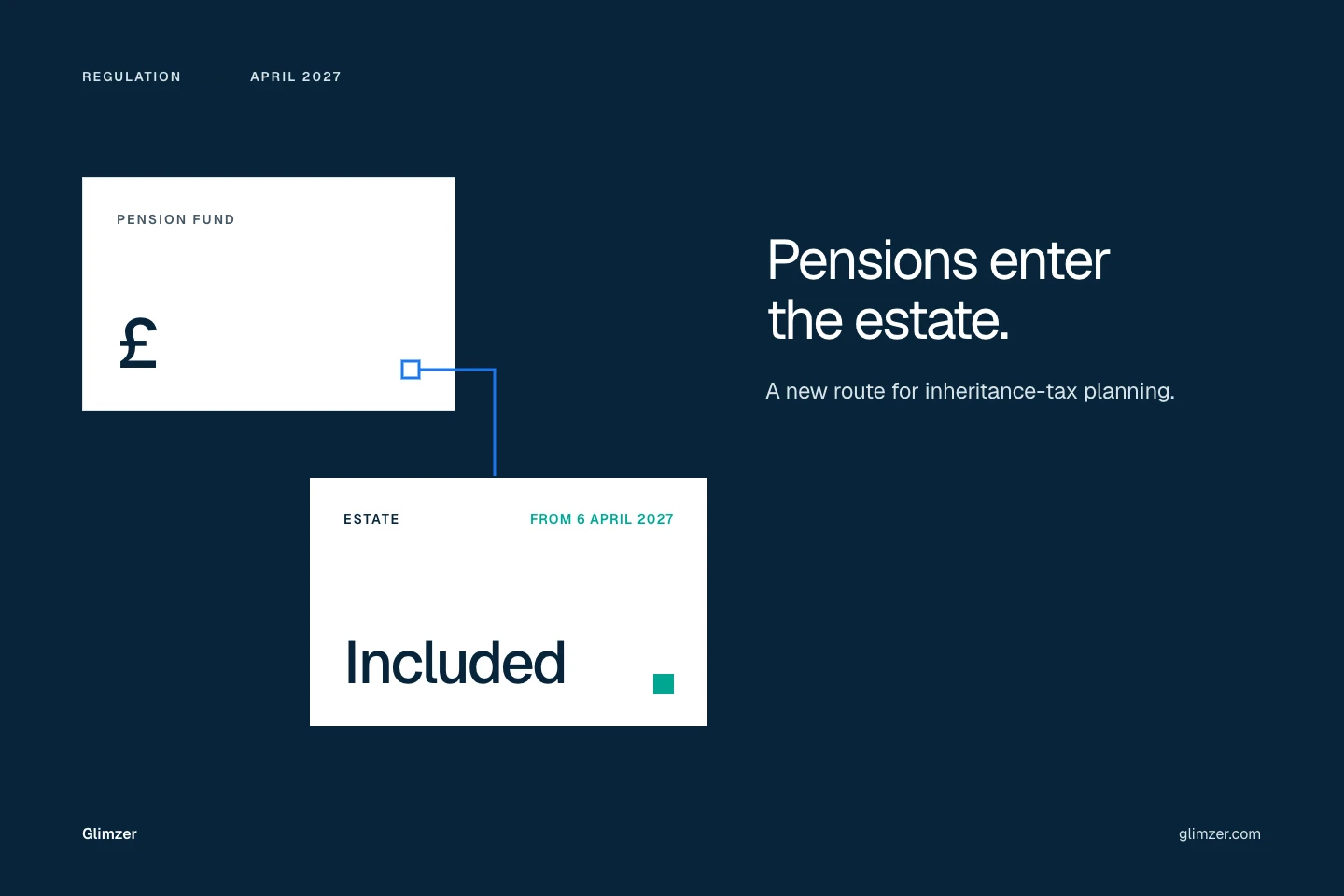
From 6 April 2027, that changes. For deaths on or after that date, most unused pension funds and death benefits will count towards the value of the estate for inheritance tax.
This is no longer a proposal working its way through consultation. The primary legislation sits in the Finance Act 2026, and the information-sharing regulations that make it workable (SI 2026/818) were made in July. What's still arriving is guidance: HMRC has promised updated manuals and support tools before April 2027, and this week's trade press has been pointing at the gap between now and then. HMRC's latest receipts figures, published this week, show £2.3bn of inheritance tax collected between April and June, with June the highest month on record.
The picture, then: receipts climbing while the start date holds still. For an advice firm the conclusion is practical rather than political. Demand for pension and estate advice is going up, and the firms that know their client bank best will meet it with the least pain.
What changes in April 2027
The mechanics, from HMRC's policy papers and technical note:
- For deaths on or after 6 April 2027, most unused pension funds and pension death benefits are included in the estate for inheritance tax.
- Personal representatives, not pension scheme administrators, become liable for reporting and paying any tax due on those funds.
- Death in service benefits from registered schemes stay out of scope, and the exemptions for benefits passing to a surviving spouse or civil partner, or to charity, are unchanged.
- Where inheritance tax is expected, personal representatives can direct a scheme to withhold 50% of taxable benefits for up to 15 months from the date of death and pay the tax to HMRC before the rest is released.
On scale: HMRC expects around 213,000 estates to include inheritable pension wealth in 2027-28. Of those, roughly 10,500 will owe inheritance tax where previously they would not, around 38,500 will owe more than before, and the average liability on affected estates is expected to rise by about £34,000.
The first job is in the client bank
Most of the coverage treats this as a technical planning story. For the owner of an advice firm it is also a workload story, and it starts with a question that sounds simple. Which clients does this touch?
Answering it means knowing, across the whole book: who holds meaningful unused pension funds. Whose estate moves past the nil-rate bands once a pension is added. Whose beneficiary nominations haven't been looked at since the old rules made them an afterthought. Who has a spouse or civil partner exemption to lean on, and who doesn't.
If that information lives in provider portals, old fact finds and one adviser's memory, the segmentation exercise alone is weeks of work before a single client conversation happens. If it lives in one clean system, it's a filter and an afternoon. That gap is the sort of thing we built Glimzer for: a CRM and practice management platform for UK financial advice firms that keeps the client bank queryable, so "who does this affect" is a report, not a project.
The conversations themselves take time too. Between now and April 2027 most clients will have one scheduled review, maybe two. Firms that surface affected clients early can have the estate conversation inside reviews they were already going to run, instead of bolting on a crisis round in early 2027.
What's next
More detail is coming before the start date. HMRC has said it will update its tax manuals for April 2027 and provide tools to help personal representatives work out whether tax is due. Some of the finer points will keep moving. The start date won't.
None of this needs to be dramatic. The firms that come through April 2027 well will be the ones that knew their book and started early. That has always been the job. The new rules just raise the cost of doing it with scattered data.
A quiet next step
If you run an advice firm and you've ever wondered whether there's a better way to manage your pipeline and your ongoing client work, we're always happy to show you around. You can see Glimzer for yourself at glimzer.com.
Get regulatory updates, adviser technology and practical ideas for your firm in your inbox. Sign up for The Frontier Brief.
More insights
View all insightsRegulation
The FCA's outcomes monitoring review is good news for small advice firms
The FCA's July 2026 outcomes monitoring review says small advice firms don't need complex systems. What it asks for instead, in plain English.
Regulation
The Consumer Duty board report: what the FCA says good looks like
Three years into the Consumer Duty, the FCA has said what separates strong board reports from weak ones. A plain-English guide for advice firms.
Regulation
The FCA's new COCON rule on non-financial misconduct: what it means for financial advice firms
The FCA's new COCON rule covers serious work-related misconduct. What UK financial advice firms should review now.
See Glimzer for yourself.
Glimzer Workspace brings pipeline, clients, fees and introducers into one place for UK financial advice firms, so less gets missed and less time goes on admin.
This article is general information for people working in UK financial advice, not financial, legal or regulatory advice. Details were accurate to the best of our knowledge on the date published or last updated; rules, prices and third-party products change, so check current sources before acting. If you spot an error, email contact@glimzer.com and we'll correct it.